# Fluentd UI

[fluentd-ui](https://github.com/fluent/fluentd-ui) is a browser-based [fluentd](http://fluentd.org/) and [td-agent](http://docs.treasuredata.com/articles/td-agent) manager that supports following operations.

* Install, uninstall, and upgrade Fluentd plugins
* start/stop/restart fluentd process
* Configure Fluentd settings such as config file content, pid file

  path, etc
* View Fluentd log with simple error viewer

## Getting Started

If you've installed td-agent, you can start it by `td-agent-ui start` as below:

```
$ sudo /usr/sbin/td-agent-ui start
Puma 2.9.2 starting...
* Min threads: 0, max threads: 16
* Environment: production
* Listening on tcp://0.0.0.0:9292
```

Or if you use fluentd gem, install fluentd-ui via `gem` command at first.

```
$ gem install -V fluentd-ui
$ fluentd-ui start
Puma 2.9.2 starting...
* Min threads: 0, max threads: 16
* Environment: production
* Listening on tcp://0.0.0.0:9292
```

Then, open <http://localhost:9292/> by your browser.

The default account is username="admin" and password="changeme"
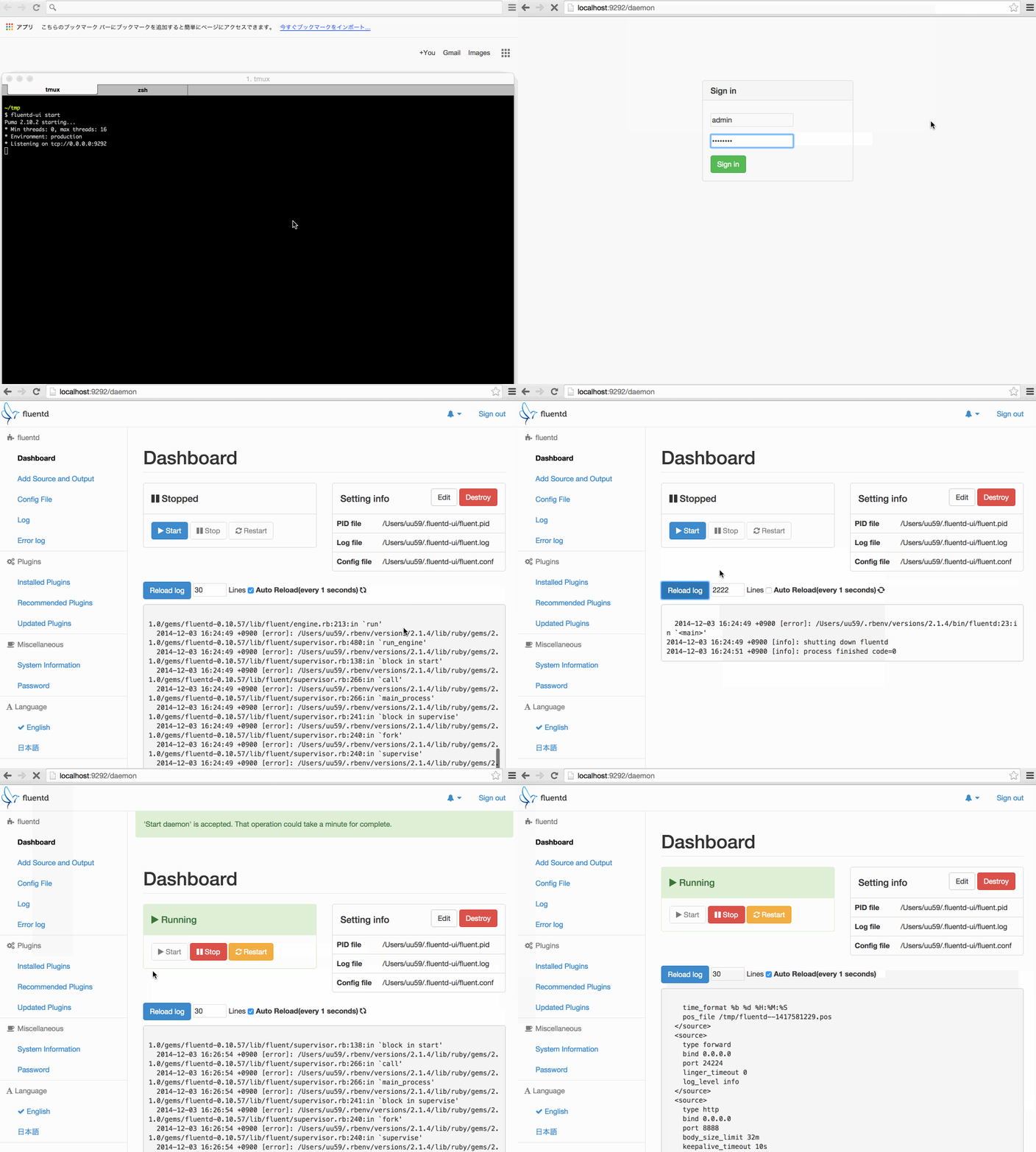
![fluentd-ui](/files/-LXN75LobUYsnqh1DN83)

## Screenshots

(v0.3.9)

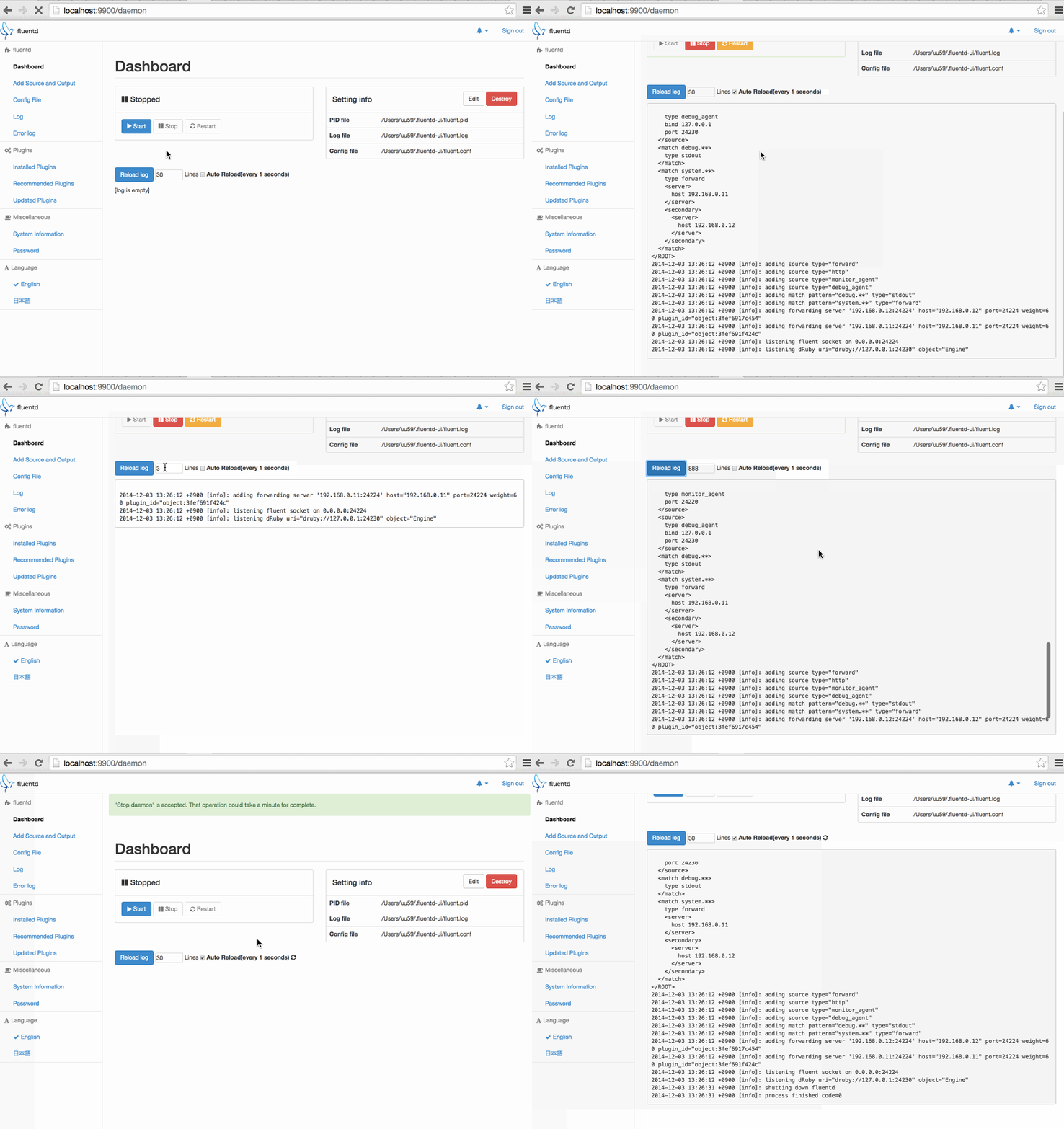
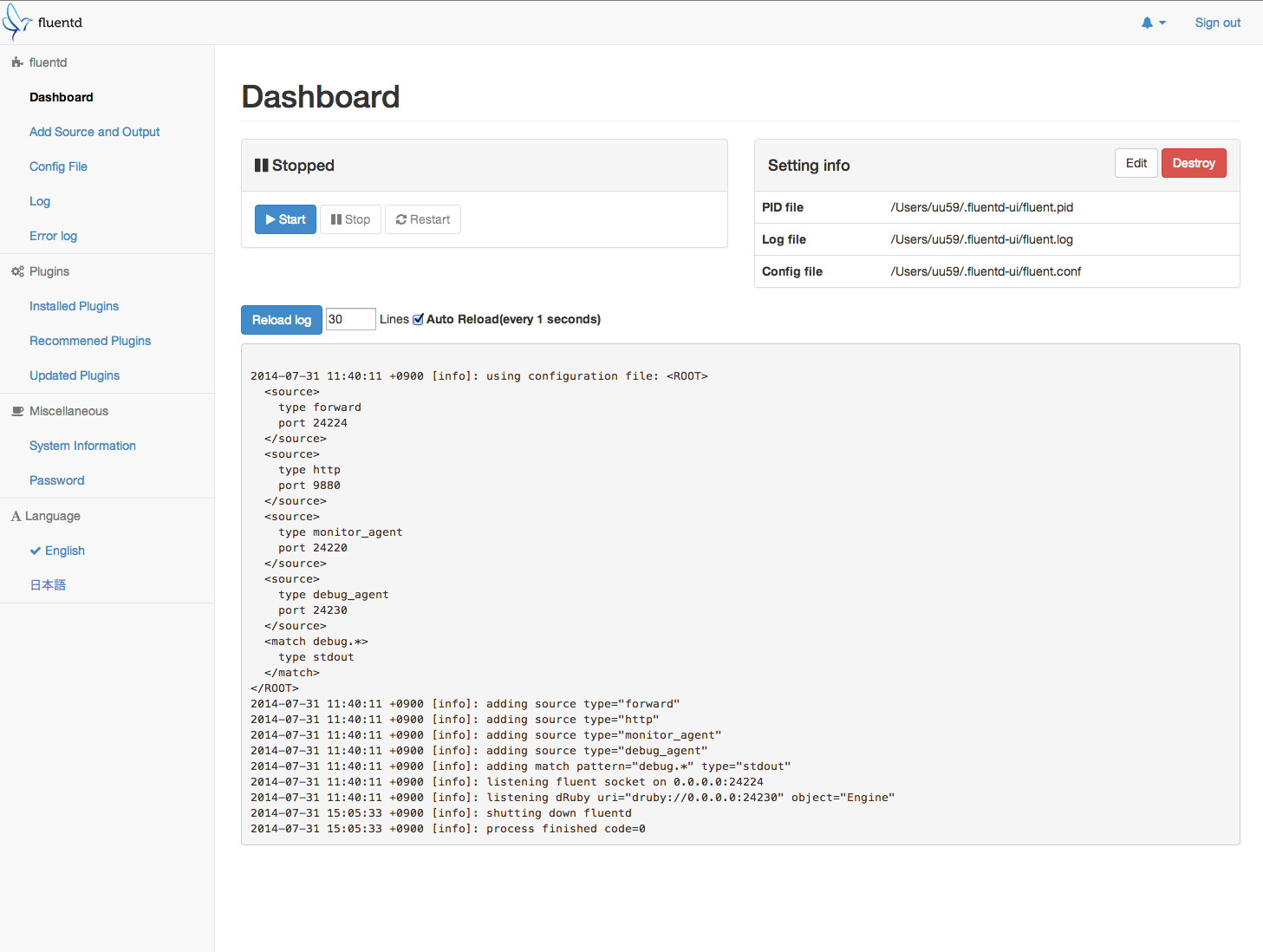
### Dashboard

![dashboard](/files/-LXN75Lqhjda7klOWXLH)

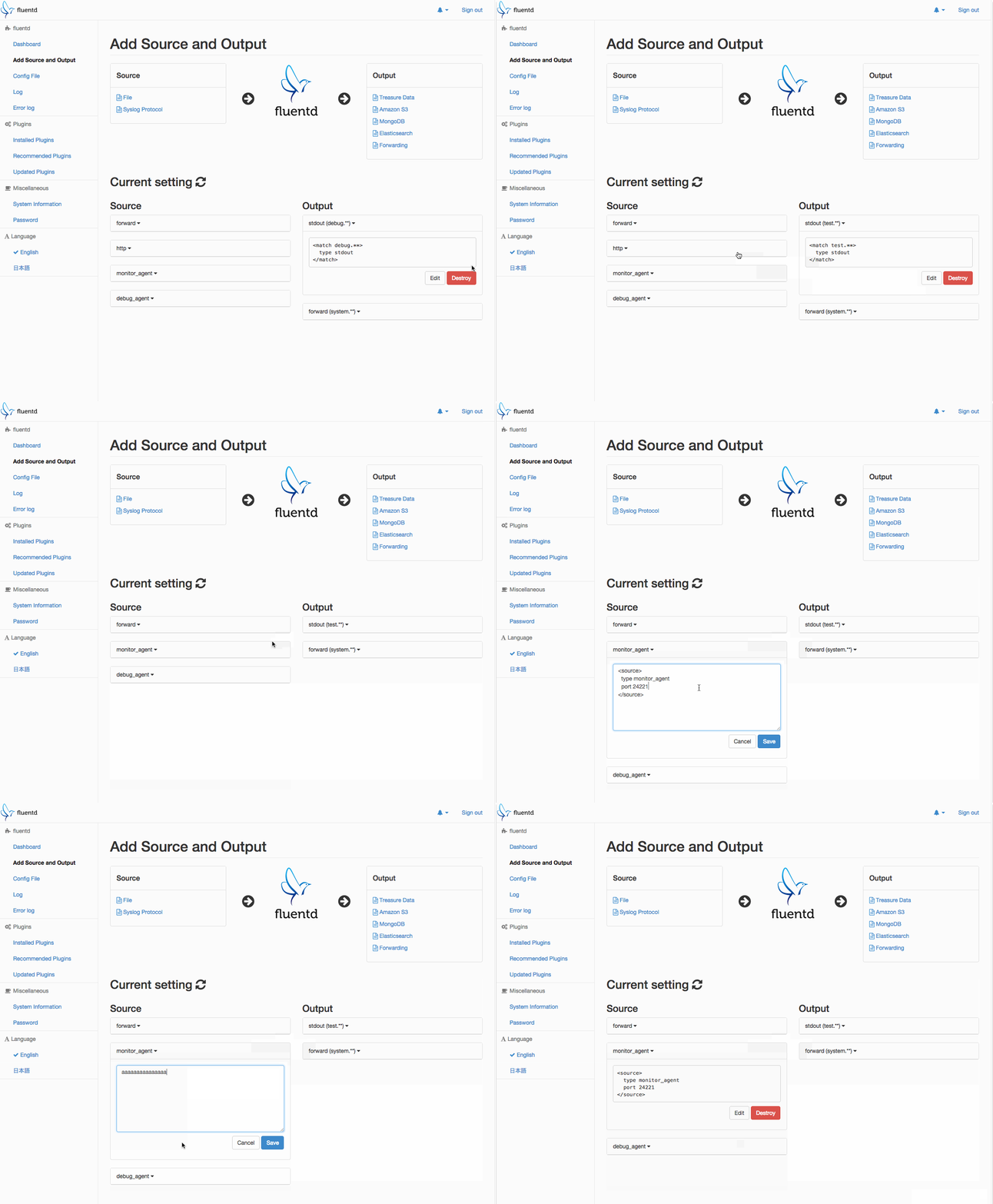
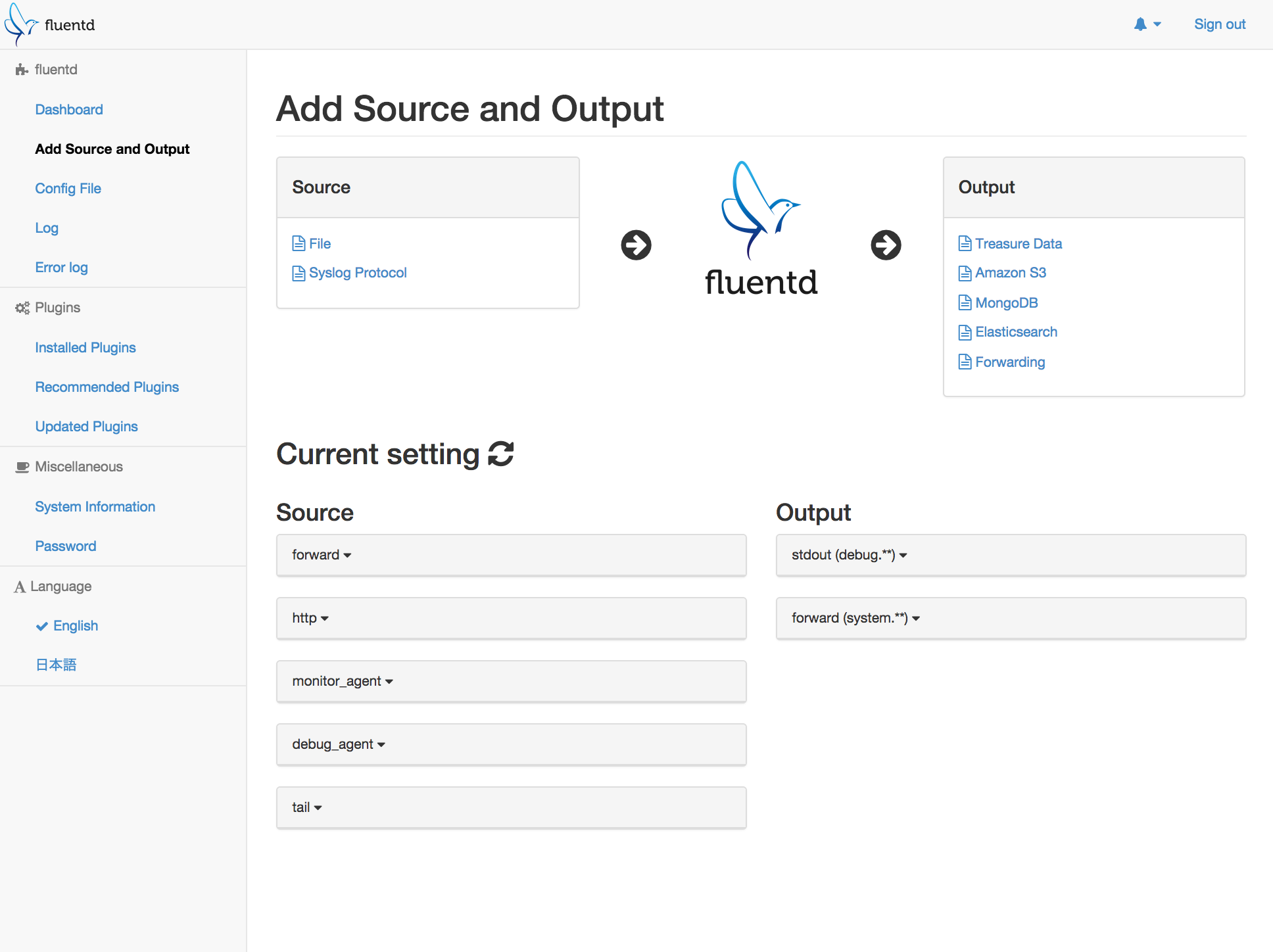
### Setting

![setting](/files/-LXN75Ls4uwG3MIRBti-)

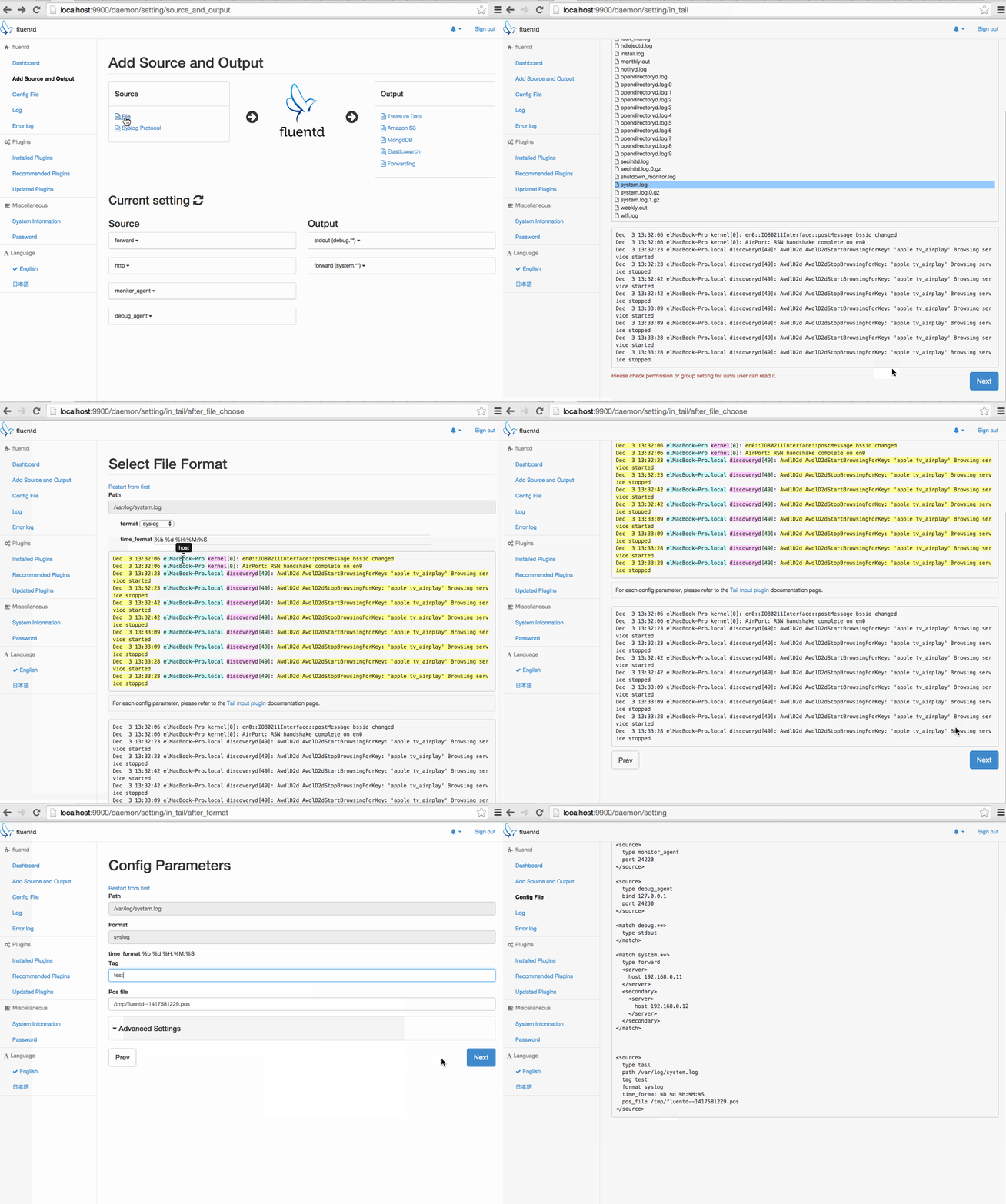
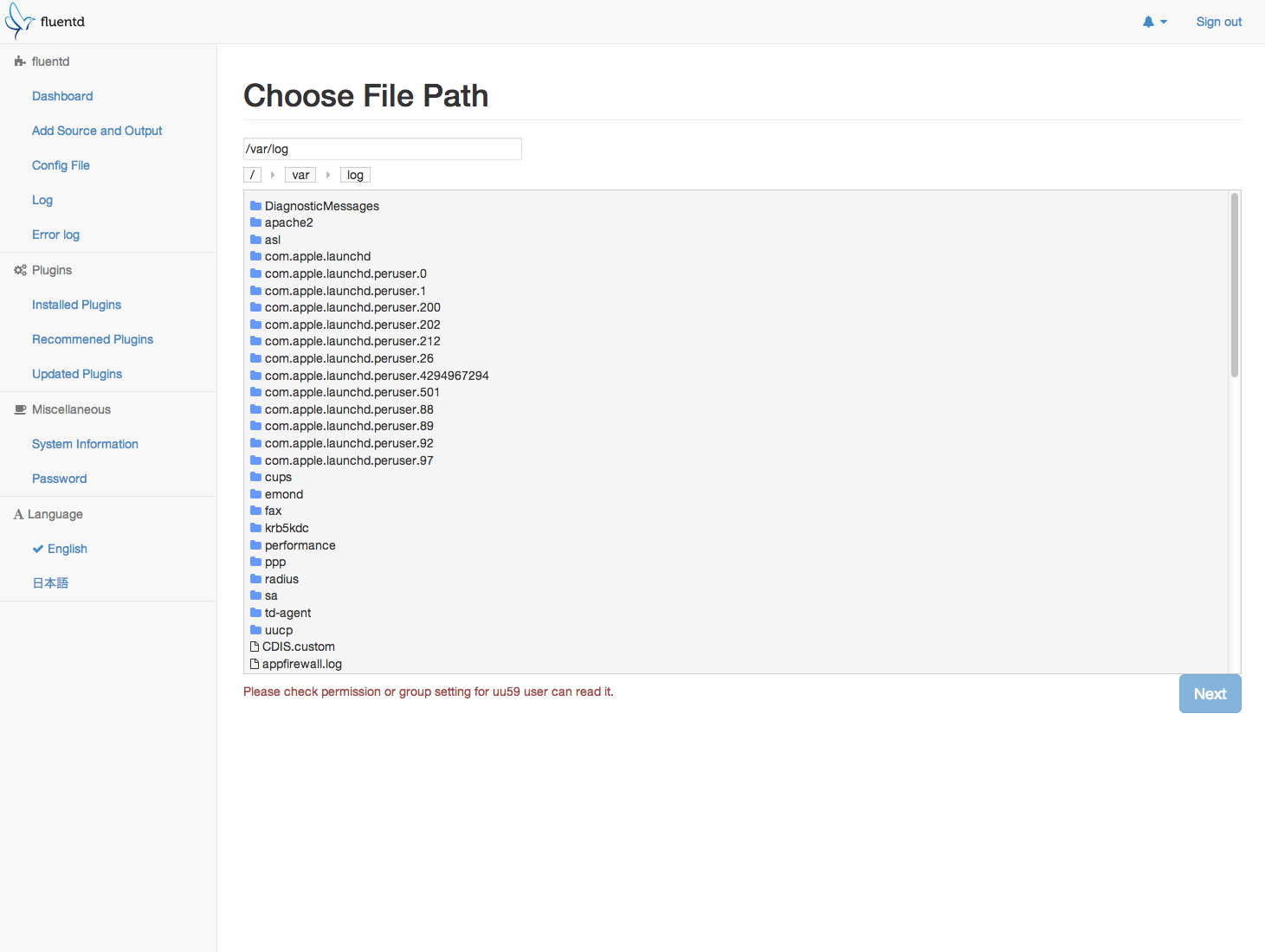
### in\_tail setting

![in\_tail](/files/-LXN75Lu8ZFlZsWbyiba)

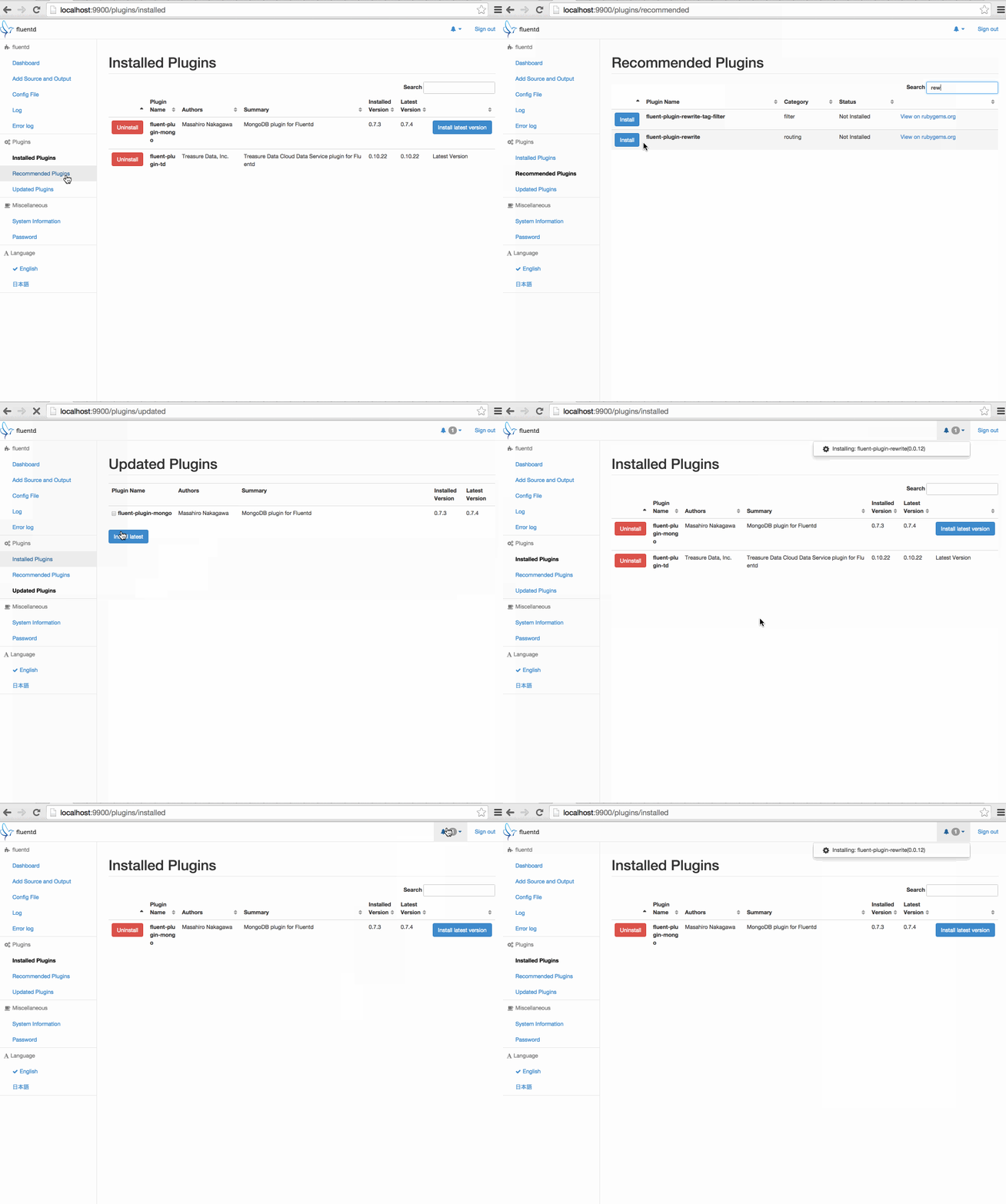
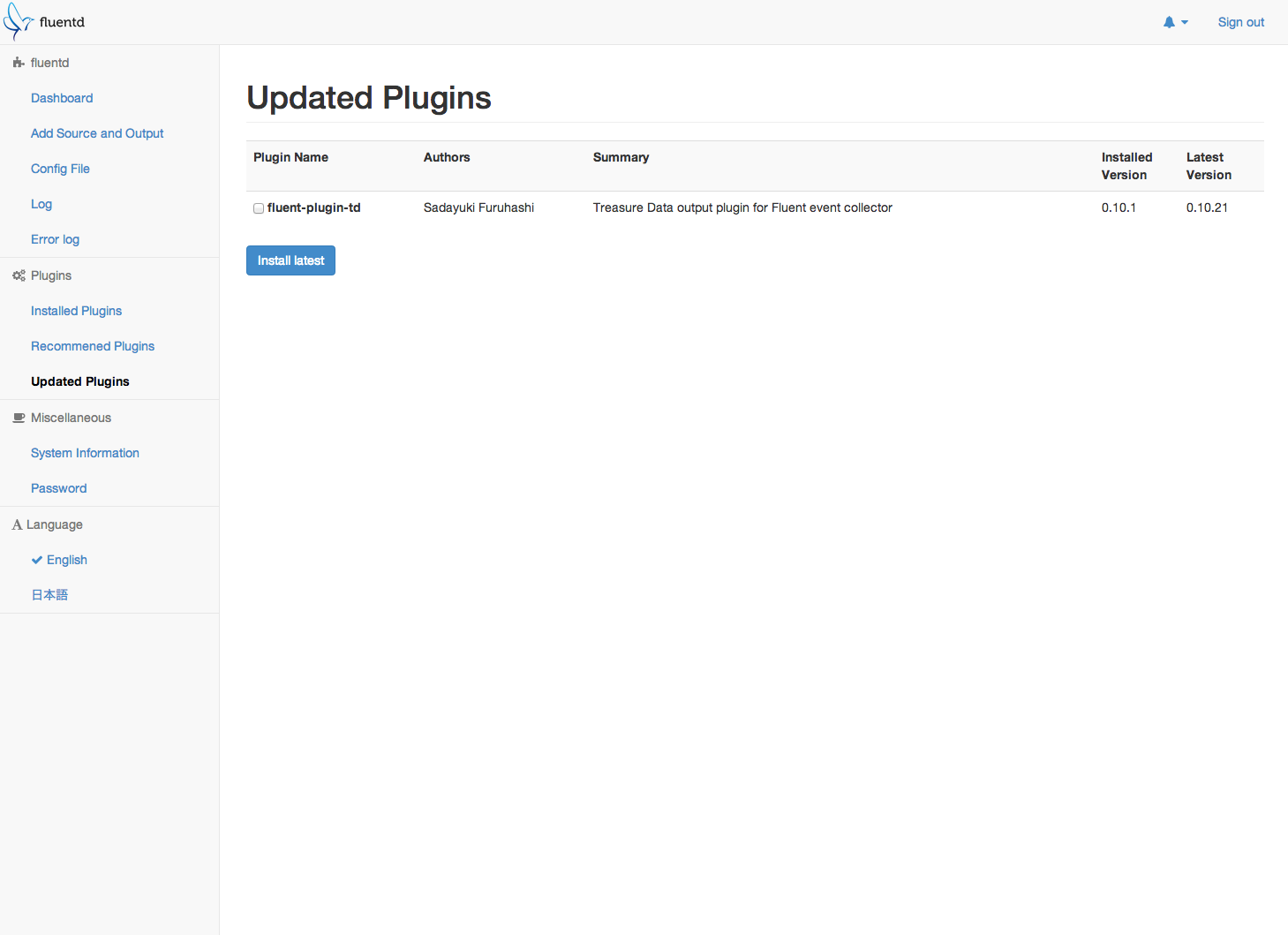
### Plugin

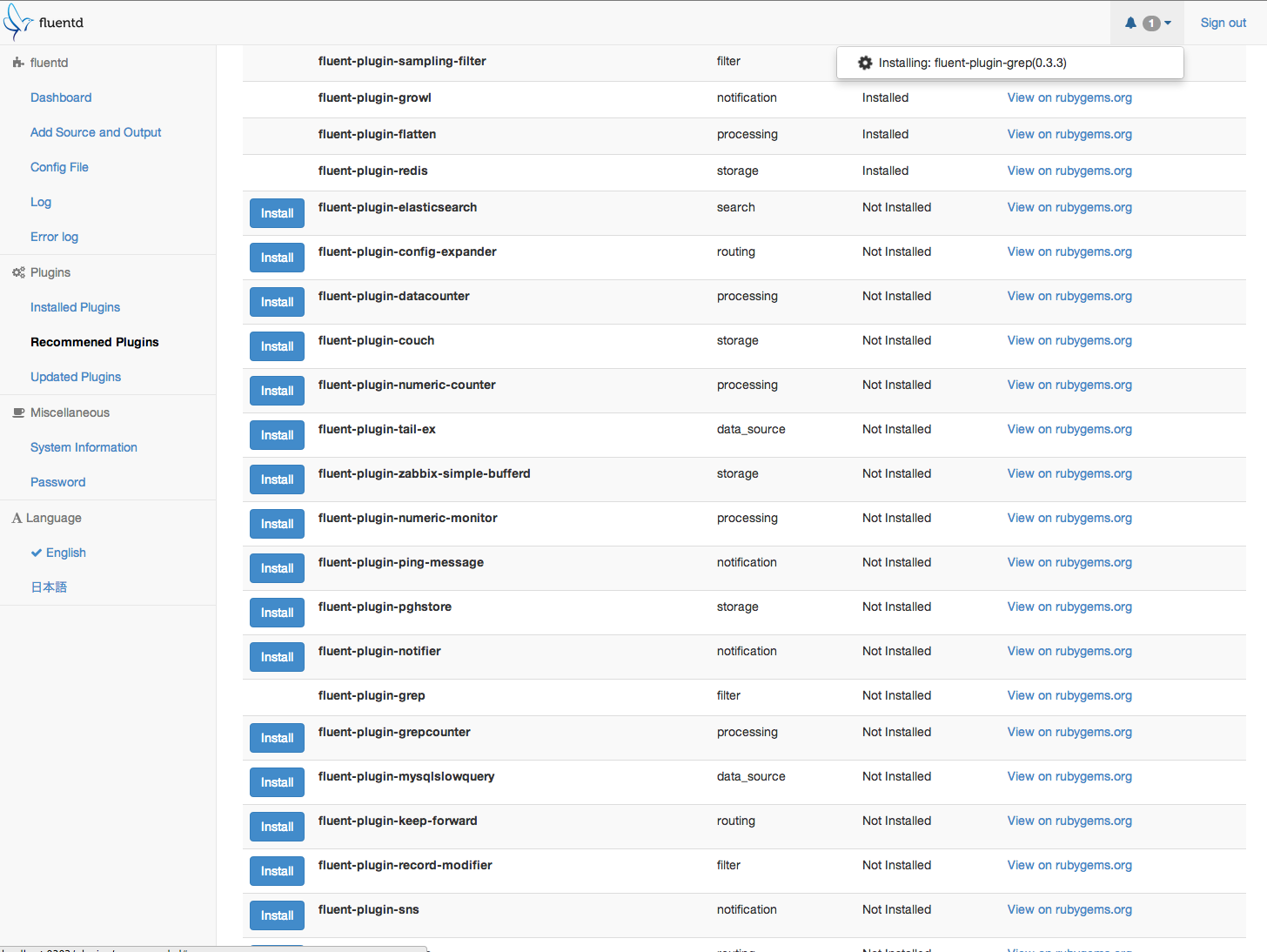
![plugin](/files/-LXN75LwXtZ-_EUY8A1i)

![ss01](/files/-LXN75LySbiYP5pdVZiH) ![ss02](/files/-LXN75M-jqdAEBlQHqQo) ![ss03](/files/-LXN75M1tIVYzDBR2vp6) ![ss04](/files/-LXN75M3IRX-64NbIe3n) ![ss05](/files/-LXN75M58Do4BvU-trsj)

If this article is incorrect or outdated, or omits critical information, please [let us know](https://github.com/fluent/fluentd-docs-gitbook/issues?state=open). [Fluentd](http://www.fluentd.org/) is a open source project under [Cloud Native Computing Foundation (CNCF)](https://cncf.io/). All components are available under the Apache 2 License.


---

# Agent Instructions: Querying This Documentation

If you need additional information that is not directly available in this page, you can query the documentation dynamically by asking a question.

Perform an HTTP GET request on the current page URL with the `ask` query parameter:

```
GET https://docs.fluentd.org/0.12/deployment/fluentd-ui.md?ask=<question>
```

The question should be specific, self-contained, and written in natural language.
The response will contain a direct answer to the question and relevant excerpts and sources from the documentation.

Use this mechanism when the answer is not explicitly present in the current page, you need clarification or additional context, or you want to retrieve related documentation sections.